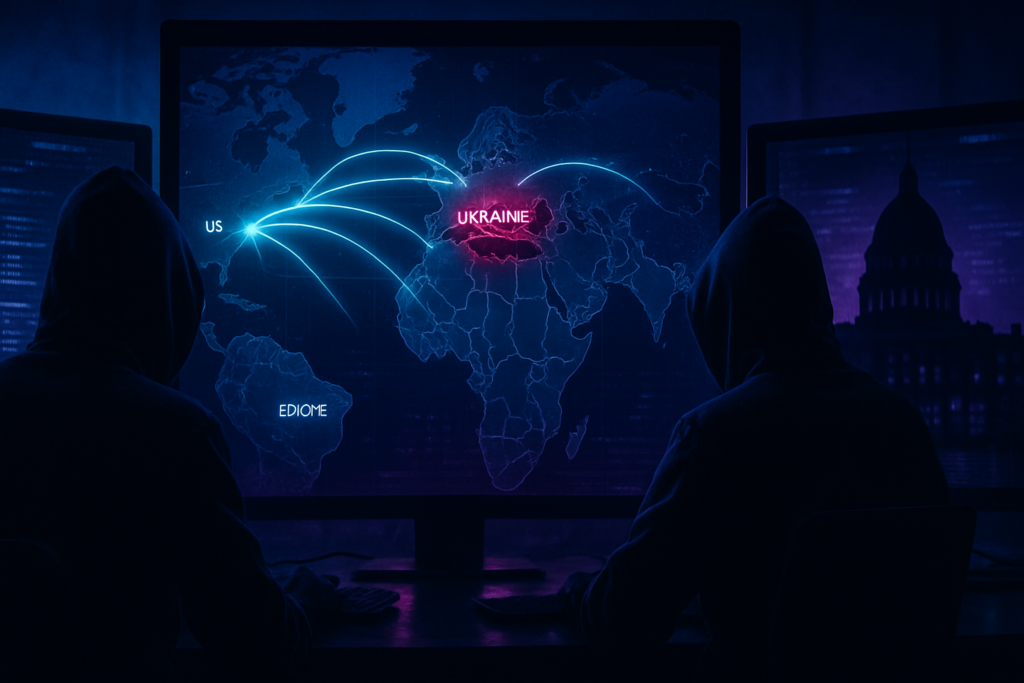
A sweeping Russian cyber espionage operation was brought to light in June 2026. Ukraine’s Security Service (SSU), working alongside the FBI and other international partners, exposed a long-running campaign targeting government officials, military personnel, politicians, and activists across Ukraine, Europe, and the United States.
The Campaign: Targets and Attack Methods
Who APT28 Was After
The threat actor behind the operation is APT28 — also known as Fancy Bear, Forest Blizzard, Sofacy, and Pawn Storm. This group is GRU Military Unit 26165, directly linked to Russian military intelligence, and ranks among the most active and dangerous state-sponsored actors in today’s threat landscape.
The victims fall into high-value strategic categories: government officials, military personnel, politicians, and activists. The geographic spread is wide, with confirmed targets in Ukraine, multiple European countries, and the United States.
The Initial Vector: Fraudulent Support SMS
The campaign’s entry point is particularly deceptive. Attackers sent fraudulent SMS messages disguised as legitimate technical support notifications, tricking victims into handing over credentials or authorizing access to their messaging accounts.
From there, the operatives carried out account takeover attacks. Once compromised, those accounts gave direct access to private communications and sensitive information. The method is effective precisely because it exploits users’ trust in official support channels.
Espionage Infrastructure: Routers and DNS Hijacking
The Role of Compromised SOHO Routers
Running in parallel to the messaging campaign was a more complex technical infrastructure. APT28 compromised home and small-office routers (SOHO) belonging to unsuspecting individuals and businesses, repurposing them as proxy nodes to conceal Russian operators’ activities.
The group also manipulated DNS settings to redirect traffic and intercept communications — a technique that keeps the attackers’ profile extremely low and makes their activity difficult to detect using traditional security tools.
The U.S. Department of Justice Disruption Operation
The U.S. Department of Justice responded with a court-authorized operation aimed at dismantling the GRU-controlled DNS hijacking network. The FBI led the technical intervention, successfully taking down significant portions of the infrastructure.
The action carried both operational and symbolic weight. It demonstrated the West’s capacity to actively counter Russian cyber espionage operations, sending a clear message to hostile state actors.
International Response and Strategic Implications
The SSU’s Role and European Contributions
Ukraine’s SSU played a central role in publicly exposing the campaign. Monitoring of the Russian infrastructure had already begun in April 2026, giving investigators time to build a solid evidentiary picture before going public.
Finland’s Security Intelligence Service, Supo, also participated in the joint operation. European involvement reinforces the multilateral dimension of the response and underscores just how essential inter-agency cooperation across borders has become in countering advanced state threats.
What CISOs and Security Managers Should Do Now
Disrupting the infrastructure, however, does not eliminate the threat. APT28 has consistently demonstrated resilience and the ability to rebuild its operational networks. Organizations need to act on multiple fronts to reduce their exposure.
A priority right now is auditing the security of corporate and home routers used in remote work environments. Updating firmware, replacing default credentials, and monitoring DNS logs are immediate steps every organization should take. Training programs must also be refreshed to raise staff awareness of SMS phishing and social engineering tactics.
Phishing-resistant multi-factor authentication (MFA) is no longer optional — it is a baseline requirement. For those managing high-value accounts, physical hardware security keys represent the most robust defense available today.
Conclusion
The Russian cyber espionage operation exposed by the SSU and FBI in 2026 confirms an established pattern. Russian intelligence services continue to target government and military personnel with sophisticated, hard-to-detect techniques. The coordinated international response offers a strong model to build on. That said, sustained vigilance and continuous investment in defensive capabilities remain the only truly effective long-term answer.
Sources:
- Security Affairs – SSU and FBI Uncover Russian Cyber Espionage Operation
- The Hacker News – Ukraine Says Russian Intelligence Used Fake Support SMS
- Ukrainska Pravda – Russian Cyber Espionage Infrastructure (April 2026)
- Supo – Joint Operation by Authorities Curbs Russian Cyber Espionage
- U.S. Department of Justice – Disruption of DNS Hijacking Network Controlled by Russia
Source: Original article
Operations like APT28’s make one thing abundantly clear: the ability to share threat intelligence quickly and reliably across organizations and government agencies is not a nice-to-have — it is mission-critical. IsacChain is built precisely for this purpose, enabling secure, verified sharing of indicators of compromise among community members, with blockchain-guaranteed traceability and automated NIS2 compliance workflows. The multilateral cooperation that made it possible to dismantle Russia’s espionage infrastructure proves that no single organization can face advanced state threats alone — what is needed is a structured, auditable trust ecosystem. Discover how IsacChain can help your organization at www.isacchain.com