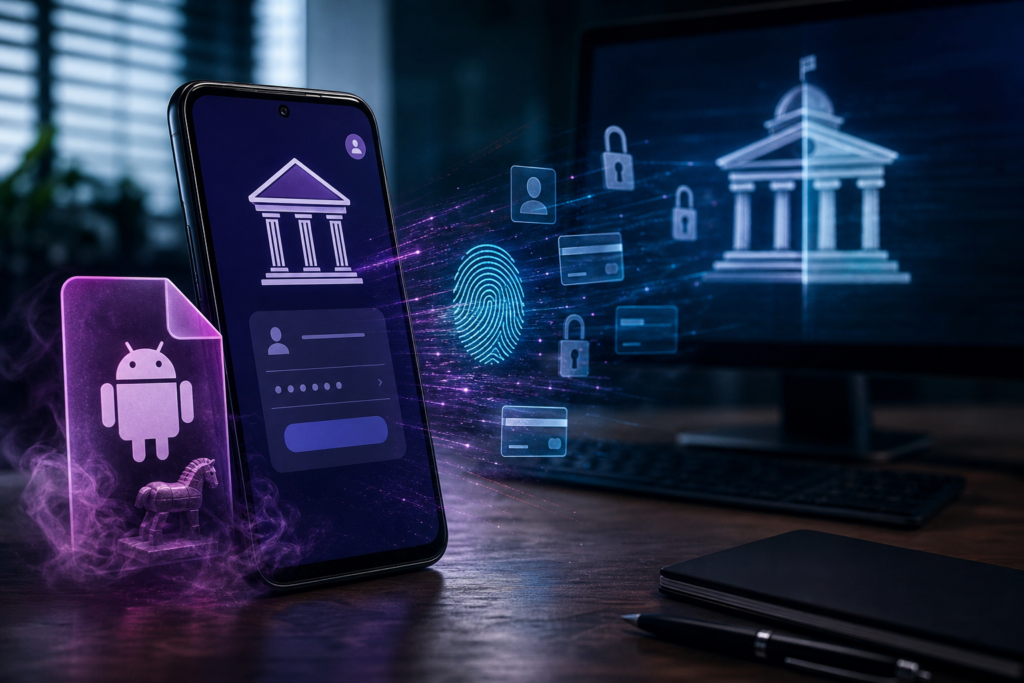
The Mirax malware is at the center of a new Italian campaign uncovered by CERT-AGID in November 2026. Threat actors built a fraudulent website impersonating the Italian Revenue Agency (Agenzia delle Entrate), with the sole purpose of distributing a fake update of the IO app — Italy’s official government mobile application — disguised as an Android APK file.
How the Mirax Campaign Works in Italy
The Attack Vector: A Spoofed Website and a Malicious APK
The attack chain begins with a counterfeit website that closely replicates the visual identity of the Agenzia delle Entrate. Visitors are prompted to download what appears to be an urgent update for the IO app. In reality, the downloaded file is a malicious APK installed outside of the official Google Play Store — a red flag that many users overlook.
What Mirax Does Once Installed
After installation, Mirax requests access to Android’s Accessibility Services. This single permission is the linchpin of the entire operation. Once granted, the malware gains near-total control over the infected device.
Specifically, Mirax is capable of:
- Viewing and remotely controlling the device screen
- Stealing banking credentials through fake overlay screens
- Intercepting SMS messages and one-time passwords (OTPs)
- Capturing the device PIN or unlock pattern
- Executing unauthorized banking transactions via legitimate apps already installed on the device
As a result, even users with strong passwords are fully exposed. The attacker can observe every action and operate the device as if it were physically in their hands.
The Bigger Picture: Mirax Beyond Italy
Campaigns Across the Middle East, Turkey, and Africa
Mirax is not a new threat. Group-IB documented active campaigns running between March and September 2026, targeting retail banking customers across the Middle East, Turkey, and Africa — with researchers estimating thousands of compromised devices.
Notably, operators timed their campaigns to coincide with Eid holidays and late July — periods when user vigilance tends to drop — suggesting a deliberate and calculated operational approach.
Different Lures, Same Attack Playbook
In other documented cases, Mirax was spread through malicious advertisements embedded in free streaming apps, redirecting users to external installers or fake Google Play Services components. What sets the Italian campaign apart is its first-ever exploitation of two trusted national brands: the Agenzia delle Entrate and the IO app. This adaptability to local contexts makes Mirax particularly dangerous. No specific threat actor has yet been publicly attributed.
How to Defend Against Mirax and Similar Threats
Technical Measures for Organizations and Banks
Organizations need to act on multiple fronts. First and foremost, sideloading of APKs from unknown sources must be blocked at the policy level through Mobile Device Management (MDM) solutions.
Adopting Mobile Threat Defense (MTD) tools is equally critical — these platforms detect Accessibility Service abuse, screen overlay attacks, and remote control behaviors in real time. Banks in particular should move away from SMS-based OTP authentication. Phishing-resistant or device-bound authentication methods offer far stronger protection.
Beyond these measures, organizations should implement:
- Risk-based transaction monitoring
- Transaction signing with clear display of beneficiary and amount
- Rate limiting on financial operations
- Rapid blocking and reversal procedures in the event of fraud
What Users Need to Know
The most important rule is straightforward: no government agency or bank will ever ask you to install an update from a website. Legitimate updates always come through the official Google Play Store.
Any invitation to download an APK from an external link should be treated as suspicious. If you suspect you have installed Mirax or similar malware, act immediately — revoke active sessions, change your credentials, contact your bank, and preserve any evidence for reporting purposes.
Conclusions
The Italian Mirax campaign marks a significant escalation. Threat actors are now weaponizing citizens’ trust in public services like the IO app. The attack model built around Accessibility Services abuse remains devastatingly effective: once that single permission is granted, conventional defenses become largely irrelevant.
Sources:
- Cybersecurity360 – Fake IO App, Mirax Can Steal Banking Credentials
- Group-IB – Mirax Android Device Takeover RAT
- Malware.news – Mirax Malware Distributed in Italy via Fake Agenzia delle Entrate Domain
Source: Original article
Campaigns like Mirax make it starkly clear how critical it is for banks, financial institutions, and public administrations to share indicators of compromise and attacker tactics in a timely manner. IsacChain enables secure threat intelligence sharing among organizations within the same sector, automates NIS2 compliance by documenting every response action, and guarantees the integrity of shared information through immutable blockchain verification. In an environment where banking malware evolves rapidly and adapts to local brands and trusted services, having access to a certified, shared intelligence network can mean the difference between early detection and significant financial damage. Discover how IsacChain can help your organization at www.isacchain.com